Aaron Robinson Systems Designer

Tile Based Puzzler

"Tournamental"
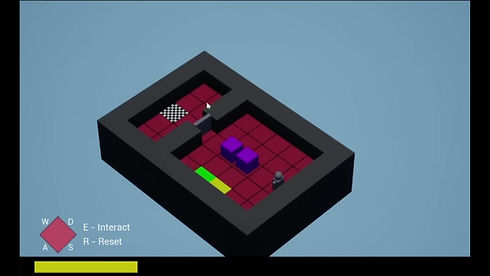
Tournamental is a tile-based class project where you control a character to solve puzzles. I was tasked to create and implement an original mechanic as well as implement a mechanic created by a classmate. The mechanic I created is a cube that changes colors when it is pressed that is used to activate colored switches in order to achieve a goal, like opening a door. The other mechanic I implemented was a rocky floor that requires stamina to move in and out of. Together, there are colored switches that can be used to make the rocky floors disappear.


What went right:
1. This was my first time utilizing Trello for a project, and I got a lot of practice using it. I enjoy how user friendly and intuitive it is. After a simple walk through on how to use it I was able to pick it up and use it like I had been using it for months. The way I can view other classmates implementation process and progress on their mechanics made it much easier to decide and eventually implement into my experience.
Image: First showing of colored cubes and switches.


What went right:
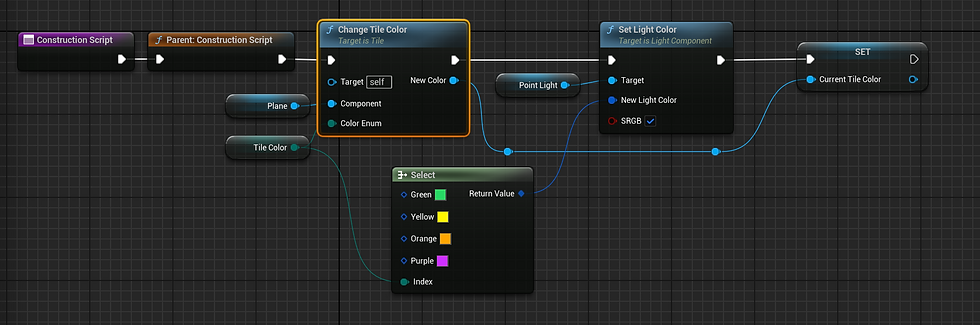
2. I was able to get my first mechanic up and running the way I intended, albeit after a couple slight reworks to my initial vision. After some thought the new way might work better than my initial idea anyways, all while maintaining the same core functionality that was intended. All of my blueprints flow well together and I got better accustomed to commenting out my code to make it easier to read. Over all, I got much more needed practice in with Blueprints.
Image: Simple puzzle progress.
What went right:
3. My initial idea was to have a cube with 6 colors for six sides that could roll to the correct color. The original backup plan I had was to implement another interaction button that could change the cube when pressed. I was able to add this without much issue, reinforcing the importance of a solid backup plan.
Video: First iteration of color changing cube.

What went right:
4. Thinking that just being able to press a button to change colors was a bit to simplistic, I decided to alter the mechanic a bit to add a little depth. Making the cube switch color every time it is pushed not only makes you have to think a little more to make sure the cube is on the right color, it also mimics the initial idea, even though it isn't quite as slick as it would have been visually.
Video: First iteration of color switches.
What went right:
5. I was able to get my navigator's mechanic up an running as I had intended, and communication with my navigator was great. The two mechanics work well together, and the ideas I initially had were able to be implemented. The two of them create the depth I feel was needed to add some degree of difficulty to the experience.
Image: First iteration of rocky floor tiles.


What went wrong:
1. As I stated above, my initial idea was scrapped due to the high degree of difficulty. Coming up with a new way to implement it proved to be a challenge in and of itself. First change worked but it wasn't a satisfying enough gameplay experience so I had to rethink it again. This is a good example of something that went wrong and right simultaneously, because I was able to overcome the adversity.
Video: Quick puzzle example featuring both mechanics, including the latest iteration of color switching cube.
What went wrong:
2. I had an issue where the sound effects I used for the door opening and the rocks disappearing was way too loud and had a lot of reverb on it. After a little bit of research I discovered that I needed to play the sound before a timeline in the code instead of after. Once I did this everything worked as planned.
Image: First iteration of second level, utilizing more advanced puzzle concepts.


What went wrong:
3. When working on the rocky floors, I had an issue where the first time a switch was triggered it the timeline I implemented was working as intended, but after that, the whole animation skipped to the end. I was able to fix the issue by stepping through the logic in my head and doing some debugging.
Image: Third level, and first one using both door and rocky floor switches.
What went wrong:
4. I also had an issue with the stamina usage when stepping from a rocky floor to a tile that used to be a rocky floor that was switched off. It was treating the new switched off tile as if it were still rocky. Again, I was able to step through the logic and resolve the issue with some extra code.
Video: Demonstration of a more refined version of level 1.


What went wrong:
5. I discovered some major mechanical flaws to the layout of level 2 and some minor flaws in level 3. It was possible to skip some steps and finish the second level with little thought, so after doing some adjusting to the cube and rocky floor placements, the puzzle started to show more substance. Level 3 was unsolvable until some small tweaks were made.
Image: Final iteration of 2nd level after some tweaking of placements and colors.